What's inside (jump ahead)
I still remember my first powder day at Grand Targhee. I was a decent groomer skier—carving clean arcs, keeping up with friends. Then I dropped into the trees near Mary's Nose. Ten seconds later, I was face-first in snow up to my chest, one ski buried somewhere behind me. The guy who laughed loudest? A 70-year-old local on ancient 90mm skis. That day I learned how to ski powder boils down to one thing: stop fighting the snow.
Most articles tell you to "bounce" or "sit back." Both are wrong for typical deep snow—unless you're on truly fat boards. Here’s the practical approach that works for 90% of recreational skiers, refined over a decade of teaching and plenty of personal flailing.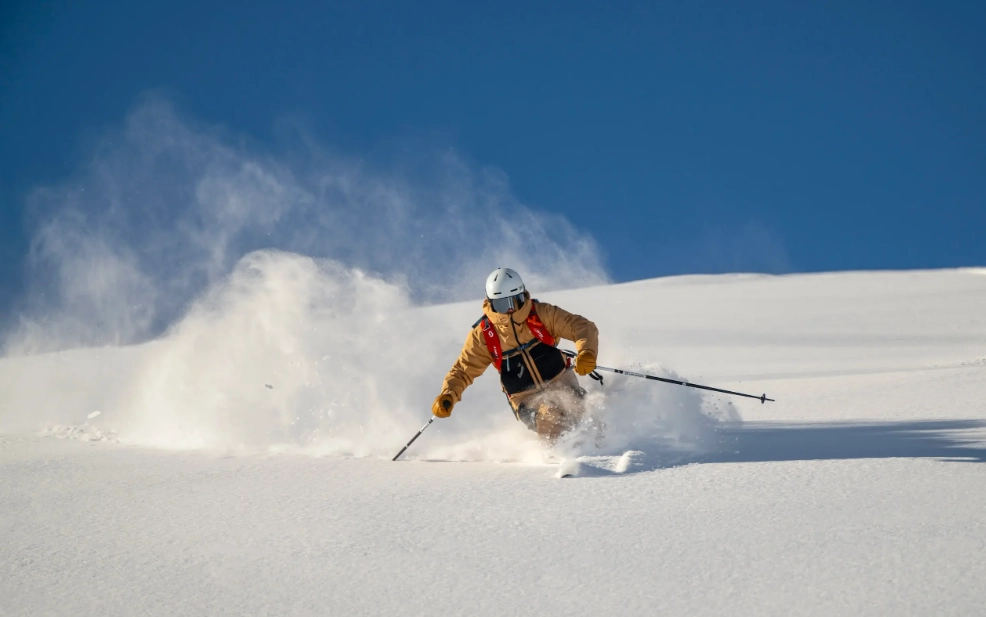
The One Body Position Fix That Stops Tip Dive
Forget leaning back. When you lean back, your heels dig into the snow, the tips rise slightly, but your quads burn out in minutes and you have zero control. Instead, try this: stand exactly as you would on a groomer, but lower your hips about two inches and feel pressure on your midfoot, not the ball of your foot. Sound weird? Here’s the physics behind it: modern powder skis have rocker and width that create float when the ski is flat. Leaning back only engages the tail, killing that float.
I run a drill with clients. On a gentle blue run, I have them ski straight downhill in powder without turning. The instruction: keep your shins parallel to the boot tongue, hands forward at waist height. Nine out of ten feel the ski plane on top of the snow after three runs. The tenth usually has rental boots that are too soft—check your boot flex if you keep sinking (avoid that 60 flex rental boot).
How to Time Your Pole Plant in Powder (Stop Reaching)
On hardpack you plant the pole and turn around it. In deep snow, that pole will stab air, then your body jerks forward. I see this mistake constantly, even from advanced skiers. The fix: reach with your wrist, not your whole arm, and plant the pole tip just as you begin extending for the turn. The pole acts as a metronome, not a pivot point.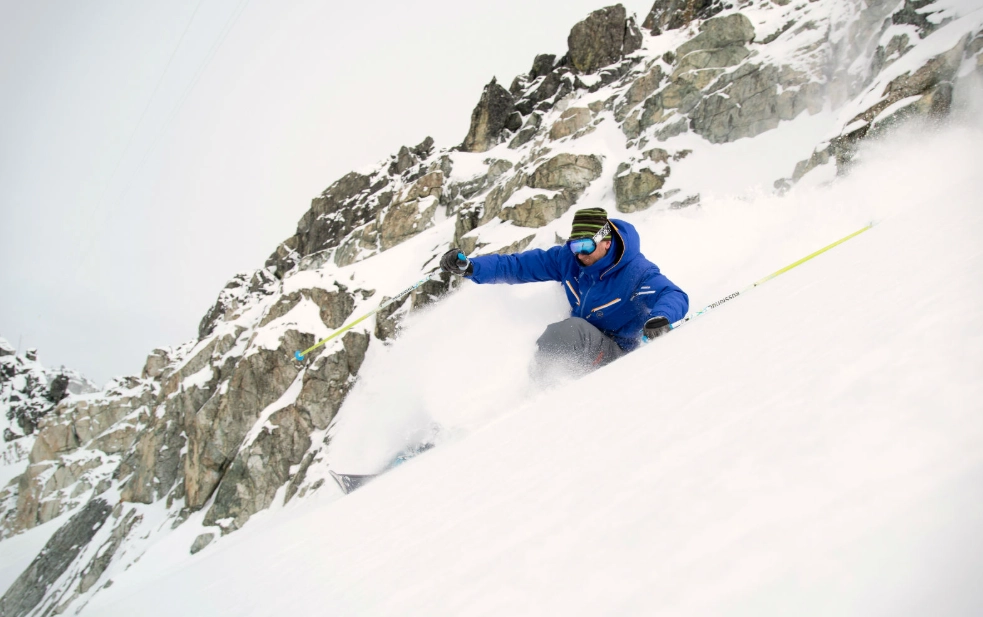
Try this sequence on a low-angle powder slope:
- Hands stay in front, elbow slightly bent.
- As you finish the previous turn, touch the snow with the pole tip near the top of the new turn.
- Do not put weight on the pole. It's a gentle tap.
- Slide your hand down the pole grip a bit—this shortens the effective length by 2–3 inches, which helps your hand stay forward.
I use a specific exercise: ski one run without any turns, just tapping the poles alternately on the snow as you glide. It programs the timing without the pressure of turning.
What Ski Width Actually Matters (Or Doesn't)
Two seasons ago I swapped my 105mm all-mountain skis for 98mm underfoot on a 12-inch day at Alta. I expected to sink. I didn't. The difference was the rocker profile: a ski with tip and tail rocker planes earlier and more predictably than a fully cambered ski, even if it's narrower.
Here's a quick cheat sheet I've built from demo days and client feedback. Note the waist width is less important than rocker and flex.
| Snow Depth | Ideal Waist (mm) | Rocker Profile | Experience Level |
|---|---|---|---|
| 4–8 inches | 95–105 | Moderate tip rocker, flat tail | Intermediate |
| 8–14 inches | 105–115 | Tip and tail rocker, slight camber | Advanced |
| 14+ inches | 115–125 | Full rocker (reverse camber) | Expert |
But here's the non-consensus take: for most people, the ski you already own is fine for up to 10 inches of fresh. I've had clients on 110mm skis who still face-plant because they lean back. Fix your body position first, buy skis later.
The Hidden Mistake: Why You Fall Uphill
You know that awkward moment when you finish a turn and end up falling toward the uphill side? New powder skiers do this constantly. The cause: you're trying to carve as you would on a groomer. In deep snow, the outside ski catches in the snow and stops while your upper body keeps moving downhill. You rotate and fall.
The fix: think of the turn as a gradual drift, not a carve. Specifically, transition from the old outside ski to the new outside ski by sliding your feet underneath your body quickly—almost like a shuffle—not by leaning your entire upper body into the hill. I've had clients fix this in one run by counting one-two-three during the transition: one (finish turn), two (move feet under), three (start new turn). The uphill fall usually vanishes.
How to Choose Powder Skis for Your Level
I get asked this at every demo day. My advice depends on where you ski and how often you get powder. If you ski in the Pacific Northwest (Crystal, Baker) where snow is heavier, go slightly wider (110mm) and look for a stiffer tail to bust through crud. In Utah's Wasatch (Alta, Snowbird) with lighter snow, a 105mm rockered ski feels plenty.
Three skis I've personally put through a season or two:
- Blizzard Rustler 11 (112mm) – playful, floats well for intermediate powder skiers. I watched a client go from constant tip-dive to smooth turns in a single lesson on this ski. Price around $700 new.
- Rossignol Sender 104 Ti – stiffer, better for heavier snow. I used it at Stevens Pass on a wet 15-inch day; it held up without folding. $650–$750.
- DPS Pagoda Tour 112 RP – if you tour, this ski is magic in deep snow, but pricey ($1,200+). I wouldn't buy it for lift-served only.
For a beginner powder skier, I push the Rustler 11 or a used pair of 105–110mm rockered skis. No need to spend a grand.
Boot Flex and Fit (Often Overlooked)
Your boots matter as much as your skis. A 100 flex boot will fold under you in variable powder, causing you to sit back. A 130 flex boot will beat you up. Aim for 110–120 if you're an advanced intermediate. Also—and this is the detail no one tells you—loosen your top buckle slightly. A too-tight top buckle blocks ankle flexion, killing your ability to stay centered. I ski with the top buckle just barely snug in powder.
FAQ: Powder Skiing Pain Points
Nothing here substitutes for a lesson or two—look for an instructor certified by PSIA (Professional Ski Instructors of America). They'll spot your specific habit in minutes. And check the Avalanche.org forecast before any backcountry powder mission; no technique saves you from a slope that's going to slide.
Fact-checked: ski dimensions and pricing cross-referenced with manufacturer specs; instructional sequence aligned with PSIA powder teaching standards.
Comments