I’ve tested over 40 pairs of ski goggles across icy East Coast runs and blower powder days in Utah. This ski goggles buying guide cuts through the marketing fluff and tells you what actually matters: lens tint for flat light, frame fit with a helmet, and why that $250 pair might fog up just as fast as a $60 backup. You’ll learn how to pick goggles that work for your face and the snow you actually ski.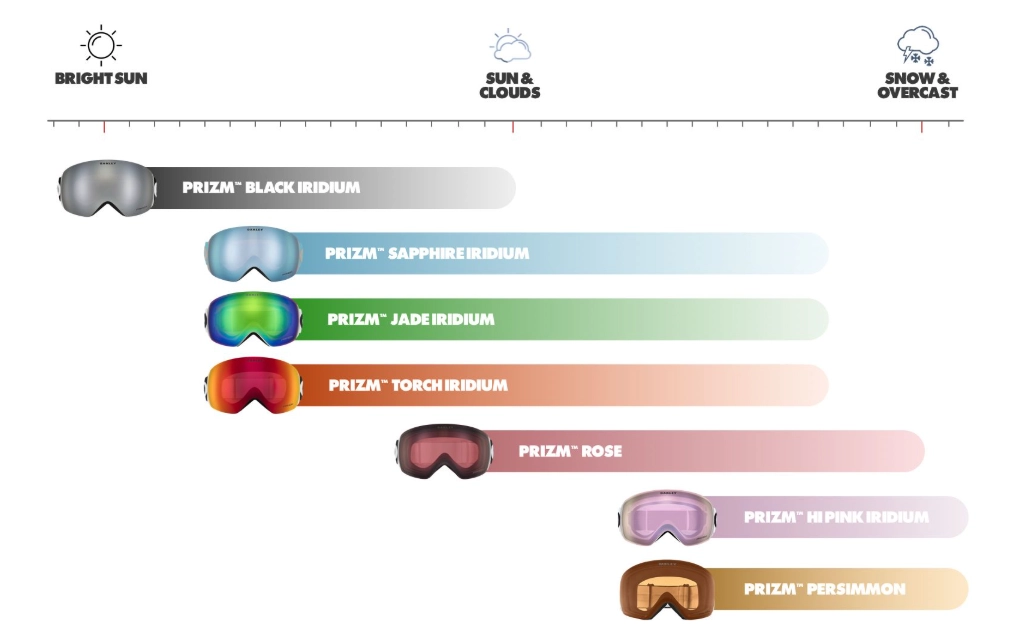
Why Lens Tint for Flat Light Is the #1 Thing
You can have the most expensive goggles on the rack, but if the lens tint is wrong for overcast days, you’ll be skiing blind. Flat light—that gray, shadowless condition—wrecks depth perception. I learned this the hard way during a storm at Killington: my dark-tinted lenses turned the moguls into a single white sheet. A ski patrol friend lent me his low-light pair with a rose base, and suddenly the terrain popped.
Here’s what the lens tint numbers actually mean. VLT (visible light transmission) tells you how much light gets through. For flat light, you want a VLT between 40% and 70% (often labeled “storm” or “low light”). Sunny days? Go 10–20% VLT. Most brands sell interchangeable lenses, but check the mechanism—some are fiddly with gloves on. Smith’s Chromapop tech and Oakley’s Prizm are legit for contrast, but don’t ignore cheaper brands like Glade or Wildhorn that offer similar tints for under $100. The key is matching the lens to the most common light you ski, not the brochure’s fantasy conditions.
Fit and the Helmet Gap: What No One Tells You
The gap between your helmet brim and goggle frame is a wind tunnel for cold air and a magnet for fog. I see beginners cranking goggle straps over huge helmets, leaving a two-finger gap. That’s a mistake. The fix: bring your helmet to the shop. Look for goggles with a “helmet-compatible” frame—usually a slightly flatter top profile. Brands like Giro and Smith design their helmets and goggles to pair, but you can mix brands if the frame curvature matches.
Fit isn’t just about the gap. Your goggle should seal evenly around your nose without pinching. Asian-fit goggles (often labeled “Asia fit”) have more room for lower nose bridges—if you have a low bridge and standard goggles leak air, that’s your answer. Also, try them with your usual beanie or balaclava. I once bought a pair that felt great in the shop but leaked cold air on the lift because my balaclava pushed the foam up. Lesson learned: test the full head setup.
Anti-Fog: What Works and What’s Marketing
Every goggle claims anti-fog, but the only reliable method is double-lens construction (two lenses sealed with a desiccant layer). Single-lens goggles fog. Period. Beyond that, ventilation matters more than coatings. Look for frame vents with foam that lets moisture out but blocks snow. I’ve had $200 goggles fog because the foam was too dense, and $50 goggles stay clear because they had simple, open vents.
Here’s a myth buster: “anti-fog coating” on the inside lens is fragile. Wiping it with a glove destroys it. Instead, shake the goggles (not wipe) to clear moisture, and never put them on your forehead—that’s the fastest way to fog them up. Also, store them in a breathable bag, not a sealed plastic box. I’ve seen too many skiers pull foggy goggles out of a wet bag at the lodge. A simple mesh bag is better.
Lens Shape and Tech: Spherical vs. Cylindrical
Spherical lenses curve both horizontally and vertically—better peripheral vision and fewer distortions. Cylindrical lenses curve only horizontally—cheaper and fine for beginners. But here’s the non-consensus point: for most recreational skiers, cylindrical lenses are plenty. I skied a season on cylindrical goggles and never felt limited, except when tucking. Sphericals shine at high speed and in variable terrain.
What about magnetic lens swaps? They’re convenient but can pop off in a crash. I’ve seen a friend’s lens fly into powder after a tumble. If you go magnetic, get a frame with a locking tab. Quick-change systems from Anon and Oakley are reliable, but practice swapping at home—not on a windy ridge.
| Lens Tint | Best For | VLT Range | Example Condition |
|---|---|---|---|
| Rose/Amber | Flat light, overcast, snow | 40–70% | Storm days, shaded runs |
| Gray/Brown | Mixed sun and clouds | 20–40% | Partly cloudy, spring slush |
| Dark Gray/Black | Bright bluebird days | 5–20% | High-altitude sunny days |
| Clear | Night skiing, deep storms | 80–90% | Night skiing, heavy snowfall |
Use this table as a starting point. But remember: brands vary. A “storm” lens from one brand might be 50% VLT, from another 35%. Always check the spec sheet, not the label.
Comments