What's in this guide (skip ahead)
I've been teaching skiing for over a decade, and I can't count how many times I've watched people struggle with their skis in the parking lot. Shoulders slumped, skis banging against their legs, grunts of frustration. It's not pretty. But here's the thing: carrying skis doesn't have to be a battle. With the right technique, you can walk from the car to the lift with zero drama. This guide is exactly what I wish I'd known when I started out.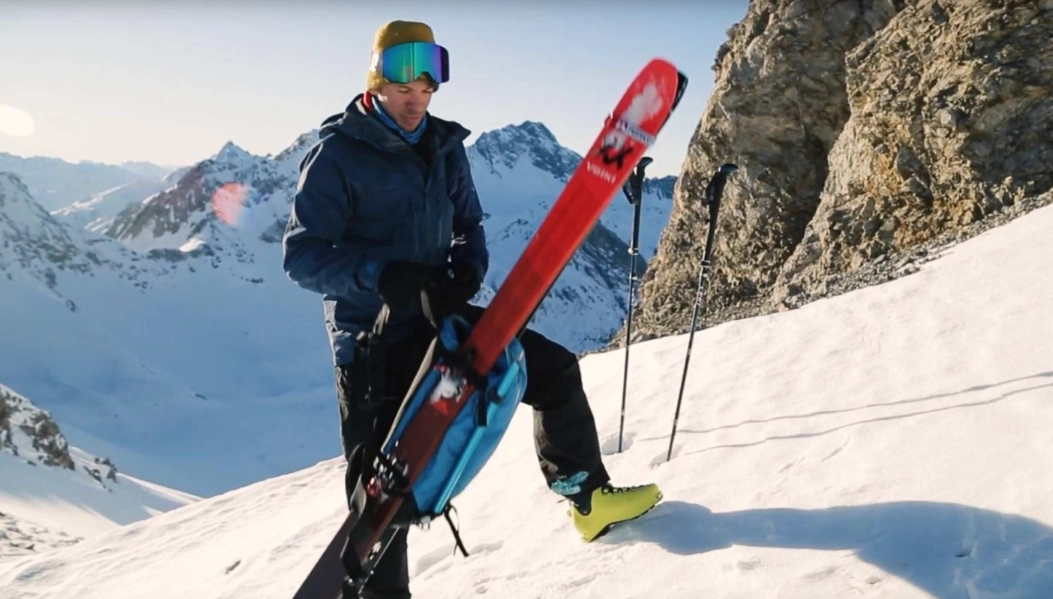
Shoulder Carry: The Classic Method Done Right
The shoulder carry is the go-to for most skiers, and for good reason—it's efficient and keeps your hands free. But most people do it wrong. They hoist the skis onto their shoulder like a bag of potatoes, and the skis flop around, digging into their collarbone.
Here's the fix: place the skis on your shoulder so the bindings are behind your shoulder, not on top of it. The brakes should be locked together (more on that later). Grip the skis near the toe piece with your hand, and let the tails hang behind you. Your arm should be relaxed, not gripping for dear life.
I always tell my students to imagine balancing a tray of drinks—light grip, steady hand. That's the feel you want. If the skis feel like they're sliding, it's because you're holding them too far forward. Shift your grip back a few inches and it'll feel way more stable.
Two-Hand Carry for Heavy Skis
Got a pair of fat powder skis? Or maybe you're just tired after a long day. The two-hand carry is a lifesaver. You hold the skis horizontally in front of you, one hand on each ski near the bindings. It looks a bit awkward, but it takes the load off your shoulders.
I use this method when I'm carrying my 120mm underfoot skis—those things are tanks. The key is to keep the skis close to your body and your elbows bent at 90 degrees. Don't let them hang low; that's how you tweak your back. Walk with short, quick steps. And watch out for the tails—they have a habit of clipping the person behind you.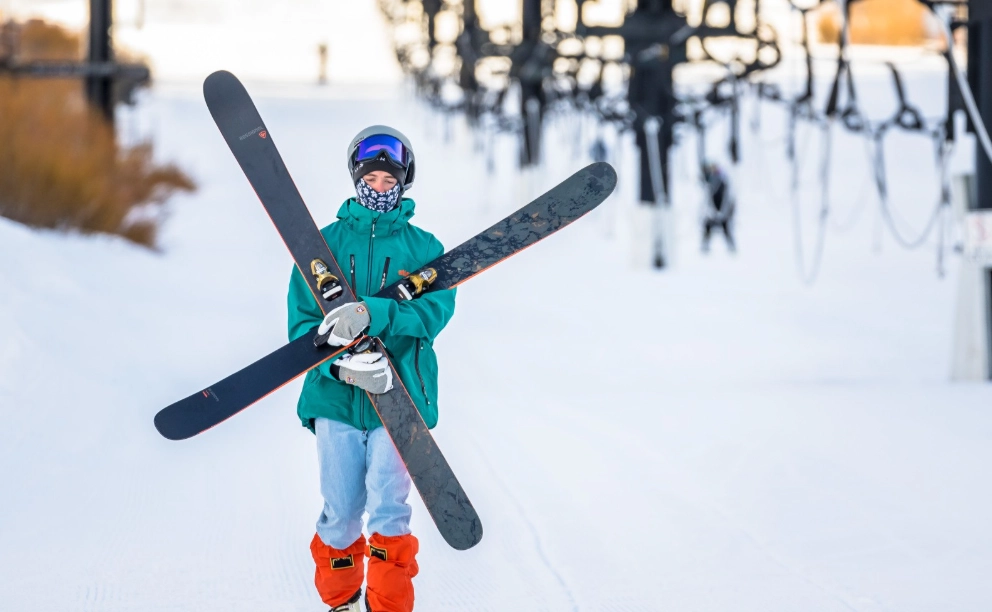
Backpack Carry: Hands-Free Option
If you're hiking to a backcountry spot or just need your hands for coffee and poles, a ski backpack with A-frame or diagonal carry is a game-changer. I've been using a diagonal carry for years, and it's my favorite for long walks.
Here's how it works: strap the skis to your pack so they run diagonally across your back. The tails point up and to the side, and the tips point down. Make sure the skis are tight against the pack—no wobbling. The first time I tried this, I didn't tighten the straps enough, and the skis swung around like a helicopter blade. Not fun. Now I double-check the buckles every time.
One more tip: if you're using a backpack, put your boots in the pack and carry your skis on the outside. That balances the weight and keeps your hands free for poles.
Gear Hacks That Actually Work
You don't need fancy gear to make carrying skis easier, but a few cheap accessories can help. Here are my top three:
- Ski straps: These are basically Velcro bands that hold your skis together. They prevent the skis from sliding apart and make the whole package more manageable. I always keep a pair in my jacket pocket.
- Ski carrier: It's a simple strap with a handle that wraps around your skis. It distributes the weight and gives you a comfortable grip. I picked one up for $15 at a local shop, and it's lasted five seasons.
- Shoulder pad: If you have sensitive shoulders, a padded strap or even a folded fleece can make a big difference. I've used a cut-up yoga mat before—not pretty, but it worked.
Don't bother with those overpriced ski carriers that look like golf bags. They're bulky and annoying. Keep it simple.
Common Mistakes I See Every Season
Even experienced skiers make these mistakes. Here's what to avoid:
- Not locking the brakes: This is the big one. If your brakes aren't locked together, the skis will separate and slide apart. You'll end up juggling them like circus clowns. Always snap the brakes together before you pick them up.
- Carrying with straight arms: Holding skis with straight arms puts all the strain on your shoulders. Keep your elbows bent and the skis close to your body.
- Letting skis bang into your legs: This happens when you hold the skis too low. Lift them up a bit so they clear your knees.
- Ignoring the wind: On a windy day, skis become sails. Hold them horizontally or close to your body to reduce wind resistance. I learned this the hard way during a gusty walk at Alta—nearly got knocked over.
One more thing: don't carry your skis by the tips. It might seem easy, but it throws off the balance and can damage the tips over time.
Quick Answers to Real Questions
What's the best way to carry skis with poles?
Hold your poles in the same hand as your skis, but grip them near the baskets, not the handles. That way, the poles stay out of the way and you don't have to make two trips. I see people try to carry poles separately, and they always drop them. Just bundle everything together.
How do I carry skis when walking uphill?
If you're hiking up a slope, put the skis on your shoulder with the tips pointing uphill. That way, the skis won't catch on the ground behind you. And lean forward slightly to keep your balance. I've seen too many people slip because they were leaning back.
Can I carry skis with one hand?
You can, but it's not ideal for long distances. If you have to, grip the skis near the bindings and keep them close to your side. But for anything more than 50 yards, use two hands or a backpack. Your shoulder will thank you.
How do I prevent shoulder pain from carrying skis?
Switch shoulders every few minutes, use a padded strap, and don't carry more than you need. If your skis are heavy, try the two-hand carry. And strengthen your shoulders with exercises like lateral raises—it makes a difference.
Carrying skis is one of those skills that nobody teaches, but everyone expects you to know. Once you get the hang of these techniques, you'll wonder why you ever struggled. And if you see someone fumbling with their skis in the parking lot, pass on the knowledge. We've all been there.
Comments